How to stop mistaking monotone prose for rigor when writing in the apocalypse
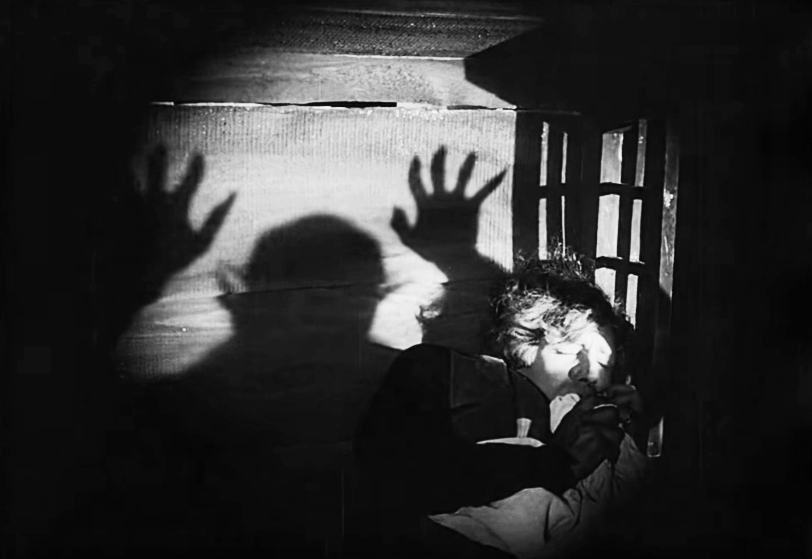
There is a peculiar irony in being told in back-to-back peer-reviews that one’s academic articles on the meta-crisis (that entangled planetary dumpsterfire of ecological collapse, econo-political decay, and psychic exhaustion) suffers from ‘poor academic voice’, further clarified as ‘immature’. The apparent offence was the use of words such as horny and vampiric to describe elements of the neoliberal state and its contribution to these crises: a, quote, “shoot from the hip style” of writing. Clearly what was preferred was the anatomising of miserable structural conditions in the tonal register of embalming fluid (I’m not mad, I just find it funny that…). Heaven forbid the author’s pulse be detectable in the prose.
This anxiety over ‘academic voice’ is not new. For centuries scholarship has clothed itself in the garb of dispassion (as a once classicist, I should know!), as if knowledge were most legitimate when stripped of its flesh and clinically delivered. But this ideal of a disembodied, objective register is precisely the sort of illusion that Gregory Bateson, himself no stranger to puncturing academic pretensions, warned us against. As he suggested, the subject is always ecological: formed, deformed, and reformed by the flux of events, histories, and affects that constitute life. To insist on an objective voice in scholarship is to insist on an impossible exile from this condition, a refusal of one’s own context.
This disembodied ideal, in its deepest sense, is nothing less than the ghost of logocentrism, a dream of language that purifies itself of desire and accident. But in the reality of the Anthropocene such dreams collapse. There is no view from anywhere, no innocent register untouched by the claggy, multispecies entanglements of living and dying on a damaged planet. To write as though immune to grief, rage, and absurdity is not neutrality, it is complicity.
And so, the rebuke from reviewer two (of course), however well-intentioned, reveals something larger about the state of academic discourse. In writing about planetary grief, intergenerational despair, pedagogical burnout, and the slow violence of extractive systems, the Academy have requested that the verbiage must be drained (vampirically?) of humanness. Are we to diagnose the world’s crisis only in a voice that pretends not to feel it?
The problem, of course, is that ideas are not transmitted through words alone. They are carried by tone, rhythm, shared register, and even the occasional jolt of provocation. Horny and vampiric may not be terms of ‘art’ in philosophical theory, but they are accurate metaphors for the libidinal and parasitic structures of neoliberalism. What better way to name a system that seduces, consumes, and drains its subjects than through language that refuses to sanitise the encounter?
There is, too, a pragmatic argument here. Students and colleagues alike inhabit the very crises we theorise. We do not need another treatise written in antiseptic prose. We need writing that acknowledges the absurdity, the ache, and yes, the humour of being alive in such a moment. If the neoliberal state is vampiric, then it is the task of scholarship to call it by its name, to expose its teeth, and drive a stake through its heart, rather than politely enumerating its ‘structural tendencies’.
It’s the Wild West out there; maybe shooting from the hip is the most applicable way of operating. But this calls to mind a set of bigger issues: who are academics writing for? And where are they writing for? When scholarship speaks only to itself in a register designed to be out of reach, it elegantly locks the door to the ivory tower behind it. However, when academics write for the people, and the time, and the crises of now, knowledge and ideas are able to circulate beyond journals and conferences. The often present assumption in academic literature that we are not people located in a real place with particular environments speaks to a Universalism that continues to divide, neoliberalise, and isolate academia from the communities it should be serving. Philosophy gains moral force when it is legible to those whose lives it touches, and critique becomes transformative when it reaches the world it seeks to change.
The good of scholarship lies not (only) in the precision of its arguments (cue an analytic philosopher somewhere getting a bad case of scopaesthesia), but rather in the resonance of its voice. To excise the authorial voice from academic writing is to deny readers the very register through which ideas breathe, irritate, and inspire. Desiring an Ancient Greek tragedy without the chorus is all machinery, no lament.
And with ‘machinery’ we are brought to one of the many spectres currently haunting the world, AI. For, in a moment when machines are becoming capable of producing flawless, grammatically consistent, utterly placid text, infinitely recyclable and infinitely beige, the only thing left to distinguish writing worth reading is the voice that exceeds algorithm. It is the crack, the pulse, the excess of subjectivity that refuses to be flattened into stochastic syntax. The danger of AI to the Academy is not only that it produces an epistemological echo-chamber loud enough to dilute or drown out that entire ecosystem, but that it produces a terrifying kind of perfection: writing without vulnerability. In this sense, the demand for standardised ‘academic voice’ and the rise of AI-generated text are two edges of the same bloodied sword. Both seek writing as a product, stripped of situatedness, affect, and risk.
But the task of scholarship, if it is to remain alive as opposed to a dusty skeleton lost to the darkest and least-often-used corner of a basement in a University library, is not to mimic the already mimetic machine, nor to compete with it on its own terms. It is to write in a way that machines cannot: embodied, excessive, contradictory, haunted, and vital. To insist on the authorial pulse is, in fact, an ecological gesture. It affirms that thought emerges from breathing, desiring, grieving bodies entangled and existing in the more-than-human world.
In a time when the Academy itself is subject to draining forces of adjunctification, administrative bloat, and the managerial creep of metrics, it seems not just permissible but necessary for scholars to reclaim their voices. The alternative is academic literature that mirrors the very misery that (in this case) it describes: dutiful, bloodless, and oddly satisfied with its own exhaustion and zombification.
So, let’s not conflate elegance with sterility, or rigor with monotony.
The world is burning, and the writing that describes it should not be afraid to crackle.
 1D3S
1D3S 
Leave a comment